
Why “dock efficiency” is the difference between a smooth shift and a chaotic one
Inside most distribution centers, the dock is where the day either stays on track or slowly falls apart. You can have strong warehouse staff, good inventory systems, and enough orders to keep everyone busy. But if the dock is waiting on trailers, waiting on drivers, or waiting on staging, the entire operation starts paying for it in minutes that turn into hours.
That is why Dock Efficiency Services matter. They are not about pushing people to work faster. They are about removing the friction that keeps dock doors from being productive. When dock doors are utilized properly, outbound schedules become realistic, labor becomes easier to plan, and carrier relationships improve because drivers are not trapped on site longer than necessary.
Zelo Express LLC supports busy facilities with yard and dock coordination that makes dock operations feel controlled instead of reactive. If you want a quick overview of how their support fits together, start with the Services page.
What dock efficiency really means in day-to-day operations
Dock efficiency is not a single metric. It is a chain of actions that must happen in the right order.
A trailer must arrive and be processed cleanly. It must be staged in the correct zone. It must be placed at the correct door at the correct time. The dock team must be ready when it arrives. When loading or unloading is complete, the trailer must be pulled promptly to keep the door available for the next move.
Dock Efficiency Services strengthen that chain so the dock does not stall. The goal is to keep doors turning, reduce idle time, and protect the schedule from small disruptions that compound across the shift.
The common problems that quietly destroy dock performance
Most facilities already know they have dock issues, but the root causes can be easy to miss because the dock is always busy.
The wrong trailer at the wrong door
This is one of the most common issues. The dock team is ready, but the trailer that arrives is not the one needed. That creates confusion, forces last-minute reshuffling, and wastes a door that should be producing.
When Dock Efficiency Services are done right, trailer staging and trailer placement follow a clear plan that matches real priorities.
Trailers not staged for quick access
If a trailer is buried behind other equipment or placed in an overflow spot without a clear retrieval plan, the dock loses time every time that trailer becomes urgent. People start hunting, radios fill with requests, and yard traffic becomes messy.
Strong Dock Efficiency Services include disciplined staging zones so priority equipment stays accessible.
Gate delays that push the whole schedule back
Many facilities focus on the dock and ignore the gate. But if drivers spend too long waiting to check in, the yard clogs and staging becomes harder. By the time the trailer is finally ready to be placed, the dock plan is already off pace.
Zelo supports entry flow through Gate Management Services, which can reduce early-day congestion and protect dock schedules from unnecessary delays.
Live loads that become unpredictable
Live load support requires precision because the driver is tied to the process. When the yard and dock are not aligned, live loads can become a bottleneck that blocks doors and increases pressure on staff.
A stable system supports Dock Efficiency Services by keeping live loads coordinated, staged, and communicated clearly across teams.
How Zelo Express approaches dock efficiency as a connected system
Dock performance improves fastest when the yard and dock operate like one machine. Zelo Express focuses on that coordination rather than treating the dock as a separate issue.
Yard management that keeps doors supplied
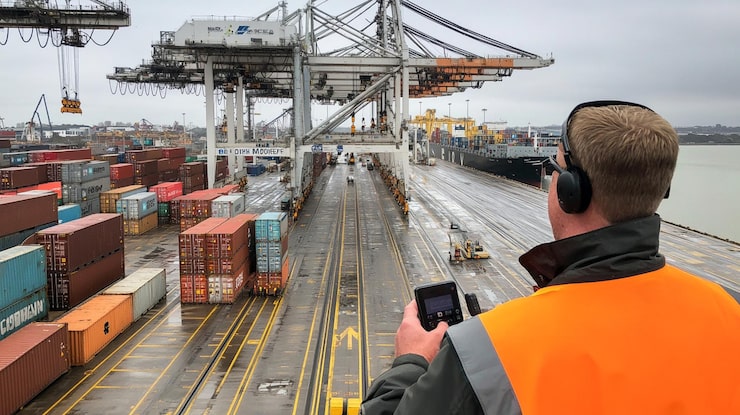
A dock door is only productive when the right equipment is present at the right time. That requires planning and oversight outside the building.
Zelo provides structured oversight through Yard Management Services, which support trailer organization, movement priorities, and routines that keep the yard from drifting into chaos. When the yard is organized, the dock stops waiting for equipment.
This is a core reason customers invest in Dock Efficiency Services. The fix is often outside the building, not inside it.
Spotting that protects door utilization
Even a strong dock team cannot maintain speed if trailers are not being placed correctly and pulled promptly.
Zelo’s Trailer Spotting Services focus on accurate trailer placement, consistent movement patterns, and disciplined execution that supports door turns. When spotting is coordinated to real priorities, doors stay active and the schedule holds more often.
That direct connection between spotting and dock flow is why Dock Efficiency Services are so valuable at high-volume sites.
Shuttling support that prevents multi-zone breakdowns
Many operations run with overflow lots, multiple buildings, or separate yard zones. Without structure, trailers end up in the wrong zone at the wrong time, and docks wait even though equipment is on site.
Zelo supports coordinated movement between zones through Yard Shuttling Services. When shuttling follows a plan, equipment becomes easier to retrieve and staging stays clean.
That stability strengthens Dock Efficiency Services by reducing “where is it” delays that destroy door utilization.
Safety and inspections that prevent last-minute disruptions
A common dock killer is the surprise issue. A trailer arrives, but it has a problem that should have been caught earlier. Now the door is tied up, the plan changes, and everyone scrambles.
Zelo supports proactive checks through Trailer Safety Inspections. Fewer surprises lead to smoother door turns, and smoother door turns are a major outcome of Dock Efficiency Services.
Zelo also emphasizes safety discipline across operations, which you can review on their Safety page. Safer yards tend to be more efficient yards because incidents create downtime and congestion.
What changes you will notice first when dock efficiency improves
When Dock Efficiency Services are implemented properly, the early wins are practical and obvious.
Dock leads spend less time calling for the same move twice.
Doors sit idle less often because the right trailers arrive on time.
Inbound and outbound teams experience fewer “surprise reshuffles.”
Drivers receive clearer direction and move through the facility with fewer delays.
Supervisors spend less time firefighting and more time managing performance.
These changes compound quickly. Each smoother door turn creates the next smoother door turn.
How dock efficiency supports outbound readiness
Outbound readiness is not just about picking the right freight inside the building. It is about having the correct trailer staged, the correct door available, and the correct timing for departure.
When Dock Efficiency Services are stable, outbound teams can plan with confidence. Loads are staged correctly. Trailers are placed at the right doors. Completed outbound trailers are pulled promptly so the next load can begin without delay.
That kind of rhythm reduces missed appointments and prevents end-of-shift chaos where teams scramble to recover the schedule.
The metrics that usually reveal where dock efficiency is leaking
If you want to improve dock performance, you need to understand where the time disappears. Most facilities do not need dozens of reports. They need a few reliable signals.
Door idle time shows whether equipment flow is consistent.
Late trailer placement shows whether staging and spotting are aligned to priorities.
Gate queue time shows whether congestion is forming early.
Dwell time shows whether the full process from entry to exit is flowing smoothly.
Tracking these consistently helps Dock Efficiency Services stay real, measurable, and focused on outcomes.
Mistakes that prevent dock efficiency from sticking
Some sites try to fix dock problems with quick patches, but the same delays return because the system is unchanged.
A common mistake is treating spotting like random move requests rather than a planned flow.
Another mistake is ignoring shift handoffs, which creates a daily reset where the next crew has to re-learn the yard.
Another mistake is allowing staging zones to drift until the yard becomes unpredictable again.
Dock Efficiency Services work when routines are enforced consistently, not only when a supervisor is watching.
Why Zelo Express is a strong fit for dock-focused operations
Zelo Express is built around disciplined yard support that connects directly to dock performance. Their service mix supports the full chain that protects door utilization, from gate control to trailer placement to yard coordination.
If you want to discuss your site volume, door count, and yard layout, the simplest next step is to connect through the Contact page. A quick conversation can clarify where your dock is losing time and which service mix will create the fastest improvement.
FAQs
What are Dock Efficiency Services designed to improve?
Dock Efficiency Services are designed to reduce door idle time, improve trailer staging accuracy, support on-time trailer placement, and keep the dock schedule aligned with yard movement so freight flows smoothly.
Can dock efficiency improve even if the dock team is already strong?
Yes. Many delays come from outside the building: poor staging, slow gate flow, and inconsistent spotting priorities. Dock Efficiency Services strengthen those external systems so the dock team can perform without interruptions.
How does trailer spotting affect dock performance?
Spotting determines whether the right trailer is at the right door on time and whether completed trailers are pulled promptly. Zelo supports this through Trailer Spotting Services, which directly impacts door utilization.
Why does gate management matter for dock efficiency?
If drivers stack up at the gate, the yard gets congested and staging becomes harder. Controlled entry flow through Gate Management Services often improves dock schedules downstream.
What is the biggest sign a facility needs Dock Efficiency Services?
If dock doors frequently wait for trailers, if staging is inconsistent, if live loads create bottlenecks, or if the yard feels reactive every day, Dock Efficiency Services can bring structure and predictability quickly.