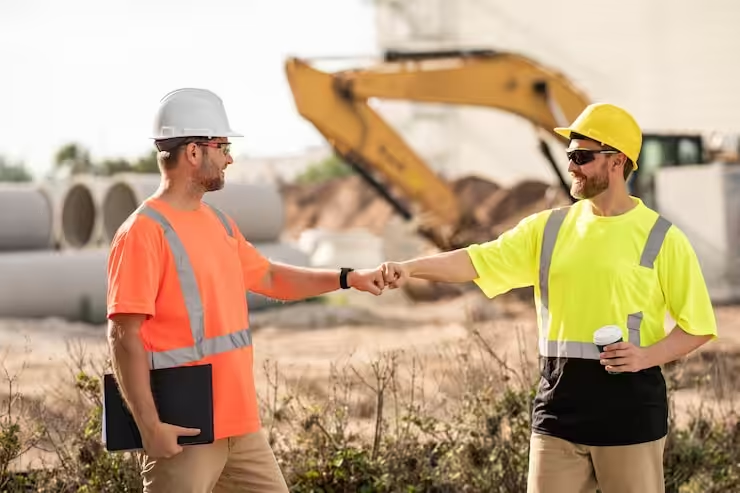

Why risk is not just safety, it is stability
Most facilities think of risk as a safety conversation, something discussed after an incident or during a review. In real operations, risk shows up daily as lost time, missed schedules, damaged equipment, and strained carrier relationships. A yard does not need a major accident to be risky. It only needs inconsistent routines, unclear traffic flow, or weak access control.
That is why Yard Risk Management is about stability as much as safety. A stable yard is predictable. Predictable yards are easier to supervise, easier to plan, and far less likely to generate costly surprises. When the yard is unstable, the operation becomes reactive, and reactive environments create more risk.
Zelo Express LLC supports yards by building routines that reduce both operational disruption and exposure, so performance stays steady across shifts and volume changes.
What yard risk looks like on a typical shift
Risk is often mistaken for rare events, but most yards experience it as friction.
Drivers stop in travel lanes because they are unsure where to go.
Trailers are staged in ways that block visibility and create blind corners.
Yard trucks make tight maneuvers in crowded areas, increasing near-miss potential.
Teams rush to recover schedule slips, which increases mistakes.
Equipment status is unclear, leading to last-minute changes and extra moves.
Each of these patterns is a Yard Risk Management issue because they increase the likelihood of incidents and disrupt throughput at the same time.
The major sources of yard risk
Traffic flow and congestion
Congestion increases risk because it forces unpredictable movement. When vehicles are packed into narrow lanes, drivers hesitate, take shortcuts, and make sudden stops. That creates conflict points and raises the chance of collisions.
Strong Yard Risk Management starts with clear traffic patterns and lane discipline that keep movement steady even during peak windows. When flow is controlled, the yard becomes safer and faster at the same time.
Uncontrolled entry and unclear driver direction
Many risk events begin at the gate. If drivers enter without consistent screening or clear instructions, they may park in the wrong area, drive into restricted zones, or block a staging lane. Even when intentions are good, confusion creates dangerous improvisation.
Zelo supports structured intake through Gate Management Services. Clean entry routines support Yard Risk Management by reducing uncertainty from the first moment a truck arrives.
Misstaged trailers and poor visibility
Random placement creates blind spots and increases rework. A trailer parked in the wrong zone might require multiple repositioning moves, each one increasing exposure and congestion. It also makes supervision harder because the yard becomes less readable.
Zelo reinforces structure through Yard Management Services, helping keep zones meaningful and lanes clear. This supports Yard Risk Management because organization reduces both confusion and unnecessary motion.
Rushed movement near dock doors
Dock areas are high-risk because they combine tight maneuvering, frequent backing, and time pressure. When trailer placement is late, teams rush to recover and make faster moves in constrained space.
Zelo supports accurate timing and placement through Trailer Spotting Services. Reliable placement strengthens Yard Risk Management by reducing last-minute scrambling near doors.
Multi-zone transfers without a routine
Overflow lots, satellite yards, or multiple buildings add complexity. If trailer repositioning happens only when urgent, it tends to occur during busy windows, increasing traffic and the chance of mistakes.
Zelo supports planned transfers through Yard Shuttling Services. Planned movement supports Yard Risk Management by keeping transfers predictable and reducing emergency retrieval runs.

How better risk control improves performance
A yard can lower risk and improve throughput at the same time because both goals depend on predictability.
When traffic flows smoothly, yard trucks complete moves faster.
When entry is controlled, staging lanes stay open.
When trailer placement is accurate, doors turn without chaos.
When communication is consistent, fewer urgent corrections occur.
This is why Yard Risk Management should be viewed as a performance system. Reducing exposure also reduces downtime, which supports better scheduling and lower operating cost.
How Zelo Express supports Yard Risk Management through routines
Zelo Express approaches yard support by connecting the pieces that typically create risk when they are treated separately.
Consistent procedures that remove improvisation
Many incidents come from improvisation. A driver does not know the expected route, a yard truck squeezes through a tight lane, or a trailer is staged wherever space exists. Consistent procedures reduce these moments.
Zelo’s operating discipline supports Yard Risk Management by making the yard feel the same from shift to shift, which reduces hesitation and sudden decisions.
Clear accountability for movement priorities
When priorities are unclear, everyone rushes to satisfy the loudest request. That creates disorder, and disorder increases risk.
Structured yard oversight helps keep priorities aligned with dock needs and staging logic. This consistency strengthens Yard Risk Management because movement is planned rather than emotional.
Safety compliance as part of daily operations
Compliance is not only a document, it is daily behavior. Clear lanes, controlled access, and predictable movement habits reduce both incident risk and audit exposure.
Zelo’s safety-first approach is reflected on the Safety page. This culture supports Yard Risk Management because safe yards tend to be more stable and easier to manage.
Audit readiness through organized operations
Many audit issues are actually organization issues. Missing records, inconsistent processes, and unclear zone rules create gaps that become findings during reviews.
When the yard is organized, audit readiness improves naturally. That is a key benefit of Yard Risk Management, because it reduces the chance of compliance-driven disruption and protects reputation.
What changes you will notice first when risk decreases
The first change is calmer movement. Drivers stop hesitating because routes and zones are clear.
The second change is fewer urgent radio calls. When staging is consistent, teams do not spend the day verifying locations.
The third change is less congestion in critical areas like dock approaches and staging lanes.
Over time, Yard Risk Management reduces rework moves and prevents avoidable disruptions that normally push schedules late.
Signs your yard has elevated risk
If near-misses are common during peak hours, traffic flow may be inconsistent.
If drivers regularly ask where to go after entry, direction and access control may be weak.
If trailers are frequently moved multiple times, staging discipline may be drifting.
If docks experience last-minute trailer placement, timing may be reactive.
If supervisors spend the shift firefighting, the yard likely lacks stable routines.
Each pattern suggests the need for stronger Yard Risk Management rather than simply more labor.
Why lower risk also reduces liability and cost
Risk is expensive. Even without major incidents, it creates hidden costs.
More wear on equipment from tight maneuvering and stop-and-go congestion.
More overtime from recovery work after disruptions.
Higher detention exposure because delays compound.
Higher turnover because chaotic environments increase stress.
Consistent Yard Risk Management reduces those costs by stabilizing the day and keeping the yard predictable.
Working with Zelo Express to reduce operating risk
Zelo Express supports yards with services that strengthen entry control, staging discipline, and movement coordination, which are the foundations of reliable Yard Risk Management. Their approach connects the work so safety and throughput improve together.
If you want to review your yard layout, traffic patterns, and where disruptions most often start, you can reach the team through the Contact page.
FAQs
What is Yard Risk Management in a yard operation?
Yard Risk Management is controlling the conditions that lead to incidents, delays, and liability by improving entry control, staging discipline, traffic flow, and movement routines.
How does risk management reduce delays?
It reduces congestion, rework moves, and last-minute scrambling, which keeps doors productive and schedules more reliable.
Does gate control affect risk?
Yes. Clear screening and direction through Gate Management Services reduce confusion and unsafe movement inside the yard.
How does spotting help reduce risk?
Accurate placement through Trailer Spotting Services prevents rushed moves near doors and reduces congestion in high-risk areas.
Can multi-zone shuttling increase risk?
It can if it is unplanned. Planned transfers through Yard Shuttling Services make movement predictable and reduce emergency retrieval runs, supporting Yard Risk Management.